Glamping photos all look dreamy, but the three most popular structures behave very differently once you’re actually inside them. A yurt, a safari tent and a geodesic dome each have their own feel, their own best season and their own price tag. That’s why the yurt vs safari tent vs dome question matters more than most travelers expect—picking the wrong one for your dates or your group can turn a magical stay into a sweaty, soggy or overpriced one.
This guide breaks down how each structure is built, what sleeping in one really feels like, and which weather and seasons they handle best. You’ll also find typical nightly costs, smart booking timing, and real trip scenarios that show which structure suits couples, families and winter travelers. By the end, you’ll know exactly which glamping stay fits your climate, comfort needs and budget.
Yurt vs Safari Tent vs Dome: The Core Differences at a Glance
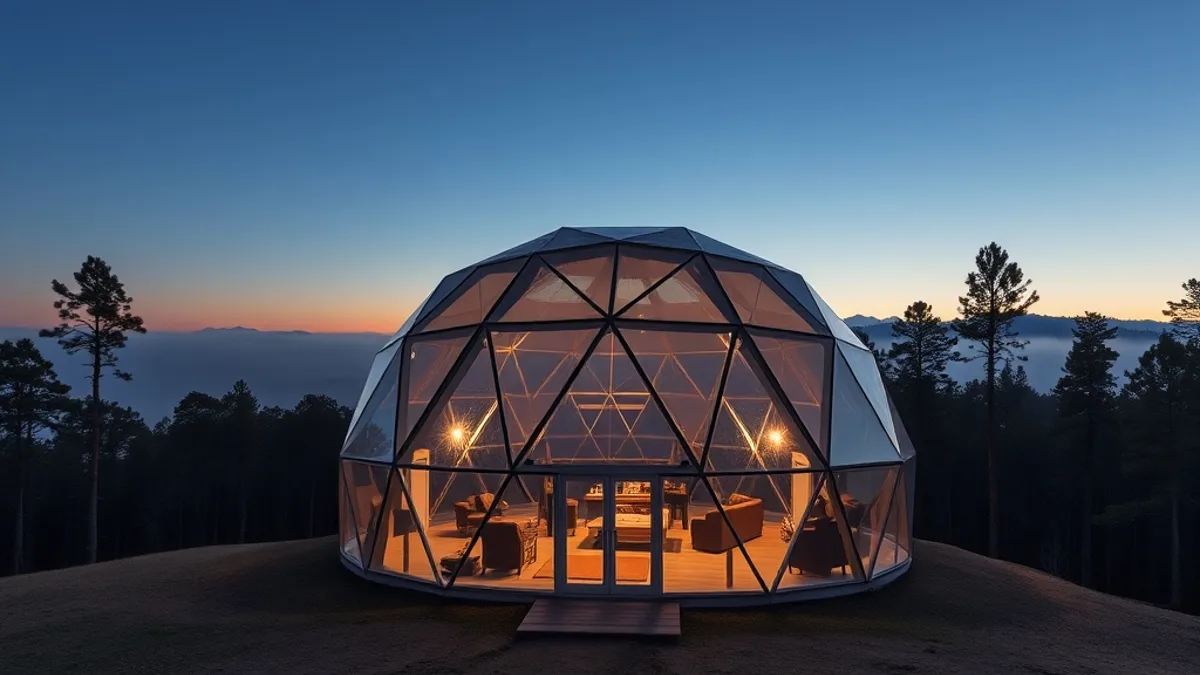
The three structures look different from the outside, but the real differences show up in how they’re built. A yurt is a circular dwelling with a wooden lattice frame wrapped in canvas, usually lined with felt insulation that gives it a solid, almost cabin-like feel. A safari tent is a large canvas structure stretched over a frame and set on a raised wooden deck, designed to catch breezes through wide openings. A dome is a geodesic structure made of triangular panels, often including transparent sections, and its curved shape gives it real structural strength.
Because of these differences, each structure has a natural audience. Couples tend to love domes for the views and the romance factor, while families often need the floor space a yurt provides. Winter travelers should lean toward insulated structures rather than open canvas. Here’s a closer look at what sets each one apart:
- Yurts use a central compression ring and radiating roof poles, which is why the ceiling rises to a peak at the center and every part of the floor has standing headroom.
- Safari tents typically include hotel-style furnishings on the deck—think a dining table, lounge chairs and sometimes an outdoor bathtub—so much of your living happens outdoors.
- Domes can be fitted with transparent panels or skylights at the top of the structure, turning the ceiling itself into a window for watching weather and night skies.
- Yurts are commonly found in state parks as well as private resorts, which gives you more booking options at different price levels than the other two.
- Construction also affects maintenance and setup. A safari tent’s canvas needs to be tensioned and cared for, while a dome’s panels and a yurt’s lattice frame are engineered assemblies, so quality varies from one operator to the next.
- Ask about the build before you book. Photos rarely show insulation, window quality or how weatherproof a unit really is, so a quick message to the host can save you an uncomfortable night.
Understanding the basics of each design makes it much easier to compare listings and spot the difference between a genuinely well-built unit and a cheaply made one. Once you know what to look for—a proper frame, good insulation, quality canvas or panels—you can match the structure to your trip with confidence.
Comfort and Space: What It Feels Like to Sleep in Each
Step inside a yurt and the first thing you notice is the space. The circular layout and peaked ceiling give you standing headroom everywhere, not just in the center, and most yurts come with real beds on frames rather than camping cots. Family-sized yurts often sleep 4–6 guests comfortably, and the enclosed round shape creates a cozy, huddle-together atmosphere that works especially well in cooler weather.
Safari tents and domes: hotel feel vs dramatic curves
A safari tent feels the closest to an actual hotel room. You typically get a proper bed, linens, furniture and a wooden deck that acts as an outdoor living room for morning coffee and evening drinks. The trade-off is capacity—most sleep 2–4 guests—and canvas heats up at midday, so afternoons can feel warm until the breeze returns.
Domes are the showstoppers. Curved ceilings rise dramatically overhead, and transparent panels turn bedtime into a stargazing session when you’re in a dark rural area. Most sleep 2–4 guests. If you want to see how a well-designed property can blend comfort and atmosphere, it’s worth reading about a stay where you can sleep in artistic escape at The Battery San Francisco for comparison.
What you’ll hear at night
Noise is the detail nobody warns you about. Canvas walls on safari tents and many domes amplify rain and wind, so a storm can sound dramatic from bed. Insulated yurts dampen that noise best—the felt liner and solid frame muffle weather, making them the quietest option for light sleepers.
Weather and Seasons: Matching the Structure to Your Travel Dates
Timing is everything in glamping, because each structure has a season where it shines and a season where it struggles. The most important rule: canvas and rain are a poor mix. Safari tents are built for warm, dry weather, so plan your stay from late spring to early autumn, when you’ll actually enjoy those big open mesh windows instead of zipping them shut against a storm.
Winter flips the script. A yurt with an insulated felt liner is the safest pick for snowy or sub-zero trips, since the insulation and solid frame hold heat far better than open canvas. Domes fall in between—their aerodynamic shape sheds wind and snow loads well, which makes them a reliable choice for shoulder-season mountain stays when weather turns unpredictable.
Heat matters too. Domes with transparent panels can overheat in hot climates, essentially working like a greenhouse at midday. Shaded safari tents breathe better in warm weather, since airflow through the mesh keeps them comfortable even without air conditioning.
- Shoulder seasons (spring and fall): domes handle sudden wind gusts and early snow better than either canvas option, so mountain trips in these months favor dome stays.
- Rainy periods: if your dates overlap with a wet forecast, an insulated yurt keeps the interior dry and quiet, while a safari tent stay can mean damp canvas and muddy decks.
- Hot summer nights: look for safari tents positioned under tree cover or near water, since shade and breeze do more for comfort than any structure choice alone.
- Deep winter: confirm any yurt stay actually has the felt liner and a heat source—some parks rent uninsulated summer yurts that close or become miserable in snow.
Budget: What Each Glamping Stay Typically Costs
Glamping prices vary more by structure than most first-timers expect. The three options overlap in some ranges, but each sits in its own typical band, and knowing where they land helps you spot a good deal or an inflated listing.
Safari tents usually run $120–$250 per night, making them the most affordable of the three in most destinations. Yurts range from $100–$200, and they are often cheaper in state-park settings, where public agencies run simpler sites with fewer frills. Domes command $150–$350, a premium justified by panoramic windows, stargazing panels and locations chosen for the view rather than convenience.
The nightly rate is rarely the final number, though. Before comparing listings, read the full price breakdown, because these extras can quietly change the math:
- Cleaning fees: many hosts charge a flat fee per stay, which matters far more on a two-night booking than on a week-long one.
- Two-night minimums: common on weekends and holidays, they effectively double the cost of a single-night trip or force you to add a day you didn’t plan for.
- Extra-guest charges: some sites price for two adults and add a per-person fee beyond that, which adds up fast for a family of four or more.
- Pet fees: not all sites accept animals, and those that do often charge separately—confirm before booking if your dog is coming.
Once you total those items, the cheapest nightly rate is not always the cheapest stay. Compare the full cost per night across your shortlist and you’ll usually find one clear winner.
How to Book the Right Glamping Stay at the Right Time
Glamping sites at popular destinations sell out faster than many hotel rooms, simply because there are only a handful of units on each property. A safari lodge-style camp might have six or eight tents in total, so a single busy weekend can wipe out availability. Timing your booking matters as much as picking the right structure, and a little planning goes a long way toward getting the unit you actually want rather than whatever is left.
- Book peak summer weekends 2–4 months ahead. Well-reviewed sites near national parks, lakes and coastlines fill their calendars early, and the best-value units go first.
- Reserve 6+ months ahead for holiday periods. Long weekends around major holidays are the single busiest dates of the year for glamping hosts, so waiting rarely pays off.
- Filter by insulation, heating and ‘four-season’ labels if traveling outside summer. A listing that looks identical in photos can be a fair-weather tent or a properly insulated unit—only the description tells you which.
- Ask hosts directly about bathroom access. A private en-suite bathroom and a shared bathhouse a short walk away are very different experiences, especially on a rainy night or a frosty morning.
- Confirm what’s included before comparing prices. Linens, a kitchenette and firewood are provided at some sites and charged as extras at others, so two similar-looking rates may not be comparable at all.
If your dates are flexible, shifting your stay by even one or two days can open up far more options and sometimes better rates. Midweek nights are consistently easier to book than Fridays and Saturdays, particularly in small campgrounds where a two-night minimum is common.
A short message to the host before booking saves most disappointments. Ask your two or three biggest questions—about heating, wildlife, noise or access to the site—keep a screenshot of the answers, and you’ll arrive knowing exactly what you paid for.
Best Trips for Each Structure: Real Scenarios
Choosing between a yurt, a safari tent and a geodesic dome gets much easier once you attach the decision to a specific trip rather than a general preference. The right structure depends on the season, the setting and who is coming along. A structure that feels magical in July can feel miserable in a January storm, and the reverse is true as well.
As a rule of thumb, match the structure to the weather first, then to the mood of the trip. Snow on the ground points one way; a warm, dry stretch of summer points another; and a sky full of stars points somewhere else entirely. The good news is that each structure has a scenario where it clearly outperforms the other two, so once you know your travel dates and your group, the answer usually becomes obvious. Here are four common scenarios and the pick that usually works best:
- Winter mountain escape with snow: choose an insulated yurt. Felt-lined walls hold warmth, the solid circular structure feels secure in a storm, and you can relax inside without watching the thermometer.
- Warm-weather trip with slow mornings: choose a safari tent. Rolling up the mesh windows and having breakfast on a wide deck with a view is the whole point of the stay.
- Romantic stargazing getaway: choose a transparent-panel dome in a dark-sky rural area. Lying in bed and watching the stars through the curved ceiling is hard to beat—just bring an eye mask for the early sunrise.
- Family of 4–6 needing space and privacy: a family yurt usually wins. The round floor plan sleeps more guests comfortably, and the enclosed walls give everyone a genuine sense of privacy that open canvas can’t match.
If your trip fits two of these scenarios at once—say, a winter stargazing break—let the season decide. Comfortable nights come first, and the views will still be there in the morning. A little honesty about your dates and your group’s tolerance for cold, heat and canvas noise will save you from booking the prettiest listing instead of the right one.
The Bottom Line on Yurt vs Safari Tent vs Dome
So which glamping stay suits you? Match the structure to your season first. A safari tent is the easy, affordable pick for warm-weather trips, while an insulated yurt handles snowy winters and gives the most space for groups. A dome is the one to choose when views and stargazing matter most, and it shrugs off wind and snow in shoulder season.
Next, weigh your budget against your group size, since rates and sleeping capacity vary quite a bit between the three. Before you pay, verify the heating setup and whether the bathroom is private or shared, and book early for peak dates. If you’ve stayed in a yurt, safari tent or dome, tell us how it went in the comments—or share this article with a friend who’s planning a glamping trip.